Plaid Fabric | History, Uses and Production

The plaid pattern has a rich, interesting history, and many uses. Let’s explore the history of plaid patterns, how it's produced, types and applications.
What is Plaid Fabric? | It’s Production and Brief History
Plaid, actually, is not the original word that we use to refer to the fabric pattern. What we refer to is carefully designed patterns which are weaved with colored yarns. This is actually tartan. The weaving process of it shows the difficulty. More complex is the pattern, more difficult to weave.
First, producers dye yarn before weaving. This way the colors last longer. Yarns could be from cotton or synthetic fibers, but traditionally they are wool.
Then the warping process begins. The warp threads are the vertical ones on the loom. They get sorted by the pattern's "sett," which is the color sequence and the width of the stripes. This action secures the fabric's width and defines its vertical pattern.
On a loom, fabric forms from interlaced weft and warp threads. Symmetrical plaids, such as tartan, need the weft's color and width to mirror the warp's. When threads of different colors weave together, they form unique squares. This can trick your eye into seeing a third color where the two colors meet. Traditional Scottish tartan uses a 2/2 twill weave.
After weaving, the quality control team checks the fabric for defects. Then they fix any issues, like snapped threads. Afterward, it gets a final treatment. This means washing off any leftover bits and napping it. This gives it that soft flannel texture.
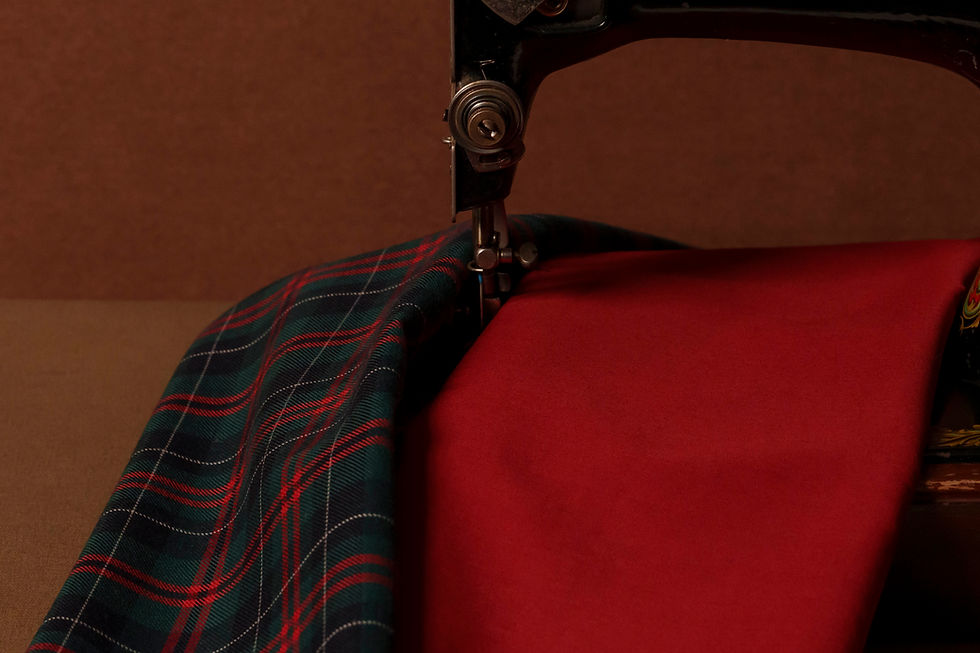
The History Of Plaid | Where Did It Appear?
The tartan pattern is a traditional Scottish woolen cloth. They first used it to tell Highland clans apart. Each clan had its own colors and stripes. Each region dyed its fabrics with the available vegetables. That’s why the tartan colors are distinctive according to their region. The word "plaid" comes from Gaelic. Scots used it to describe a garment worn over the shoulder, like a cape or blanket.
In 1746, the British government banned Scottish Highland clothing with the Dress Act. This included tartan. The fabric came to represent Scottish identity and resistance. It stayed that way until the government lifted the ban in 1782. But it wasn’t until the 1820s that tartan reemerged as a common fabric.
Sir Walter Scott was a gentleman with a romantic view of Highlanders. He wanted to make history come alive. In 1822, he and Stewart of Garth were in charge of setting the visit of King George IV to Edinburgh. The king even wore a Highland kilt outfit—which is traditional tartan clothing.
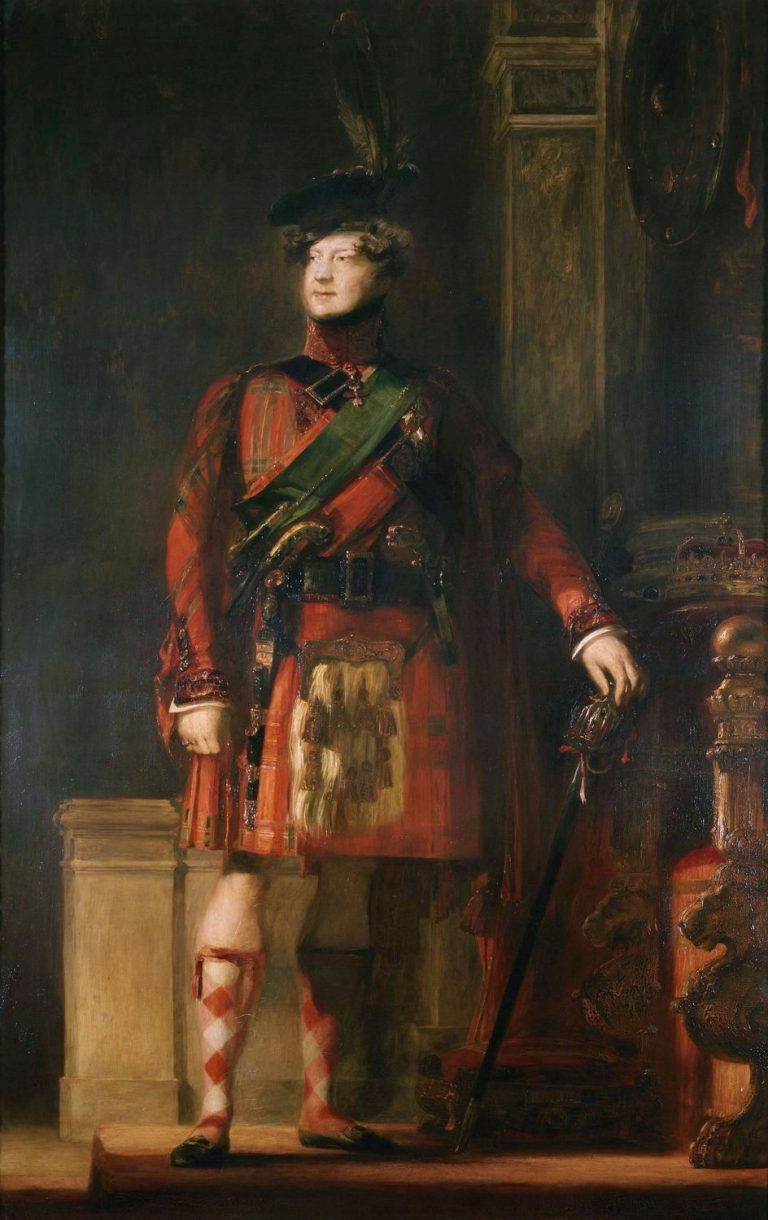
In the 19th century, Queen Victoria and Prince Albert were fascinated by Scottish history and tartan fabrics. They decorated their Balmoral Castle with tartan motifs. Queen Victoria was the one who created the idea of tartan dress. She thought some tartans were dull. To change that, she added white to the base for a more feminine touch. Thanks to these figures, plaid spread to the British for usage.
The mass migration of Scots to America and Canada helped spread plaid worldwide. With the immigration, plaid gained different meanings. It was no longer a symbol of clans for Scots. It became a symbol of sturdy and functional workwear for workers in America and Canada. Since plaid had wide recognition, people produced a wide variety of it. Let’s have a look at them.
Types of Plaid Patterns | Applications
Buffalo Plaid Fabric
Buffalo plaid has a distinctive checkered pattern by crossing two different colored yarns. Red and black are the most popular colors. Manufacturers use it in heavy flannel shirts, coats, and—of course—blankets.
Buffalo plaid, a.k.a. Buffalo Check has a legend-based, interesting history. Legend says a descendant of a Scottish folk hero, Rob Roy, migrated to America. There he started to trade tartan-patterned blankets—which is plaid in Gaelic.
In the 1830s, Woolrich Woolen Mills in Pennsylvania started using the red and black plaid pattern. A designer at the company, who also had a herd of buffalo, designed these large, two-toned squares and called them "Buffalo Plaid." This one-of-a-kind pattern gave Woolrich an edge in the flannel market. And that’s how Buffalo Check appeared in history.
Madras Plaid Fabric
Madras plaid comes from an Indian city—Madras. It gained global popularity through trade. The key feature of Madras plaid is its lightweight, cotton fabric. The fabric has clashing vibrant colors with irregular stripes. This type is perfect for summer clothing such as dresses, shorts, and shirts.
Gingham Plaid
This pattern is a simple two-color grid. The way the warp and weft threads intertwine makes squares that are all equal. Where colored threads overlap on a light surface, you end up with a square that's lighter and semi-transparent.
Gingham plaid typically features a combination of white yarns with blue or red yarns. It gives a rustic, picnic aesthetic. Commonly used in tablecloths, curtains, and children's clothing.
Glen Plaid
It's a detailed pattern, made up of a repeating weave of little and big checks. It results in a complex and textured look. Crafted primarily from soft fabrics in neutral colors such as black, gray, and white. It sometimes includes a light-colored accent stripe.
Glen plaid comes from the Glen Urquhart valley in Scotland. Edward VII, Prince of Wales, popularized the pattern. This pattern is used in formal clothing such as suits, blazers etc.
Houndstooth Plaid
It has a broken check pattern with a twill weave. This weaving technique results in special, four-cornered patterns, kind of like a dog's jagged tooth. Smaller versions of this pattern is called Puppytooth.
Traditionally, weavers create houndstooth plaid using black and white yarns. Yet, today producers use every other two colors. Coats and skirts can use this pattern, but it’s most commonly seen in accessories like scarves.
To Sum Up
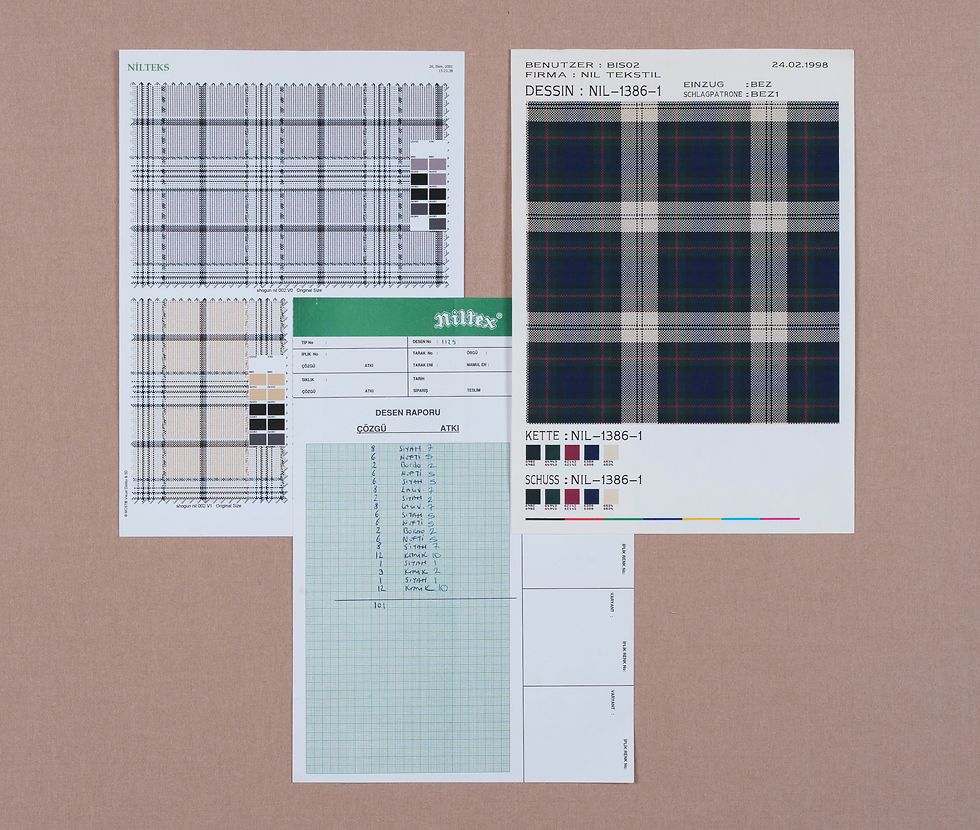
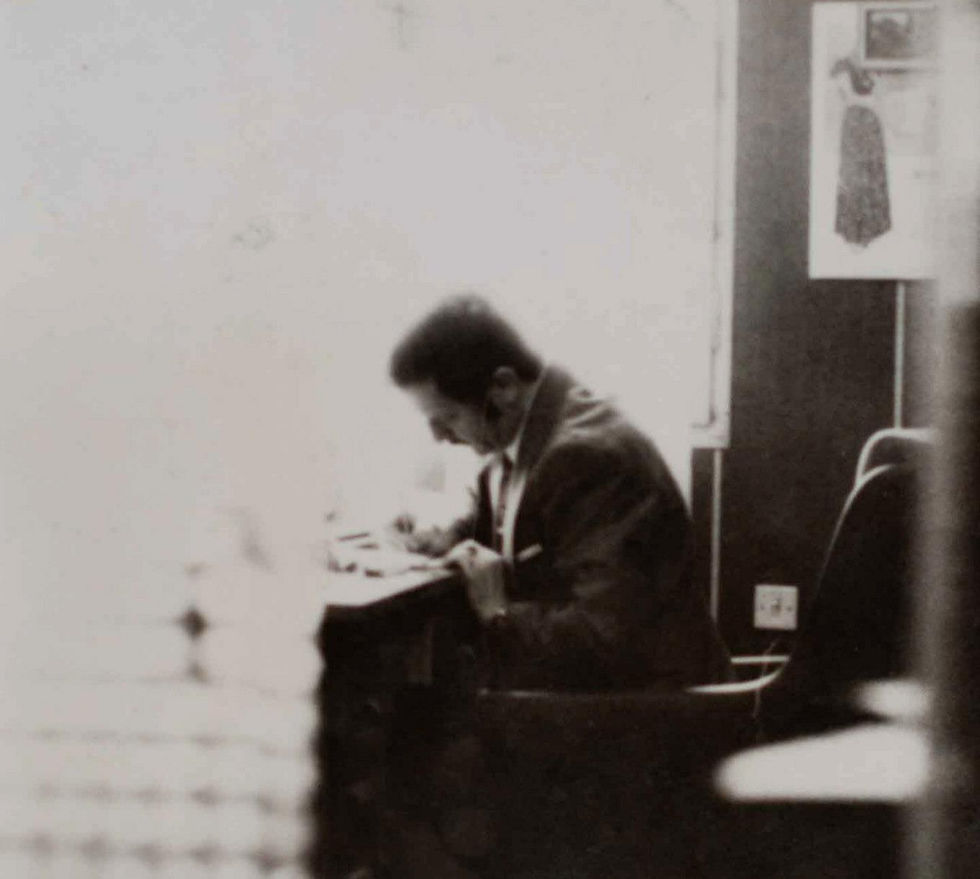
A wide variety of tartan patterns are produced around the world. By its very nature, this pattern inspires creativity. Hazday Reyna, the founder of Nil Tekstil, used to design a wide variety of tartan patterns with just paper and pencil.
Nil Tekstil carries on Hazday Reyna’s legacy as a designer into the present day with a tartan archive comprising thousands of patterns. It offers a wide selection of plaid motifs on various fabric types.
References
Brown, I. (Ed.). (2010). From tartan to tartanry: Scottish culture, history and myth. Edinburgh University Press.
Ed. 1746 – Highland Dress Proscription Act. Scotclans. https://www.scotclans.com/pages/1746-highland-dress-proscription-act
Ed. What is Tartan? The Scottish Tartans Museum and Heritage. https://scottishtartansmuseum.org/education/what-is-tartan/
Laird, N. (2017) A brief History of Tartan in Scotland. Tartan Footprint https://project1-m9gb2xku8.live-website.com/?p=63516
Wells, C. (2018) Plaid is not Just a Fad and Here are a Few Historical Reason Why. Beyond Bones. https://blog.hmns.org/2018/09/plaid-is-not-just-a-fad-and-here-are-a-few-historical-reason-why/#:~:text=After%20Bonnie%20Prince%20Charley%27s%20Scottish,it%20illegal%20to%20wear%20tartan


Comments